A healing community with no digital home
Pardes Hanna has a quiet but rich ecosystem of therapists, facilitators, and healers. Bodyworkers, shamanic guides, therapeutic writers, astrologers, group retreat leaders. They all existed in silos: word of mouth, scattered Instagram accounts, Facebook groups nobody searched.
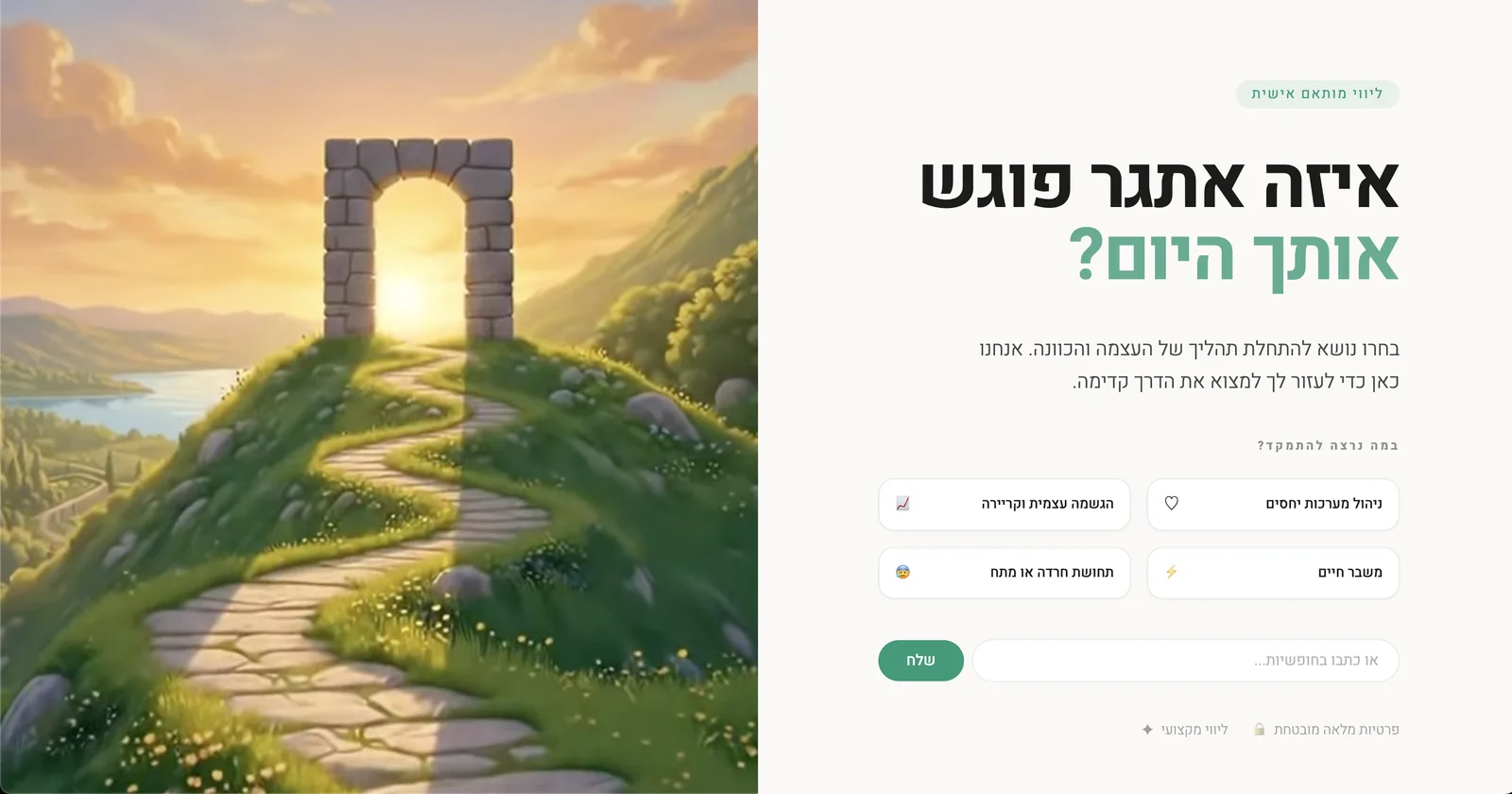
The request was clear. Build a platform where people looking for healing can describe what they need, and the platform finds the right match for them. Not a rigid filter form. Something that understands human language and the nuance of emotional need.
The platform had to work in Hebrew, support RTL layout throughout, and feel warm, not clinical. A marketplace with soul, not a directory with a logo.
"We wanted a place where someone could type 'I'm going through a divorce and need support' and actually get matched to a real person who can help, not a list of checkboxes."
Client brief, January 2026
Design system first, then architecture
Before writing a single component, I defined a visual language rooted in the identity of the place. Pardes Hanna is green, warm, earthy. The design system reflects that: soft sage green as the primary tone, warm earth tones for secondary surfaces, and a gentle cream background that reads like paper, not screen.
The key tension in the design was clinical vs. communal. Marketplace UX patterns tend to feel transactional. A list of providers with ratings and prices. That framing would have killed the product. The solution was to lead with language, not profiles. The SmartMatchingForm is the homepage centerpiece, not a search bar or a grid of thumbnails.
Designing and building simultaneously
The build process was non-linear. I designed components by describing them in natural language, then reviewed the generated code, adjusted visual decisions, and iterated. Lovable handled the scaffolding, routing, and component wiring. I handled the decisions about what the product should feel like and why.
There was no Figma mockup stage. The design lived in the conversation. The RTL system, the color palette, the messaging tone were all defined through prompting. Lovable's ability to maintain state across a complex codebase meant I could focus on product thinking instead of file management.
The AI matching edge function was the most complex piece. It required thinking through what a quality recommendation looks like, how to format the prompt so the AI returns structured JSON, and how to handle cases where no match is strong enough to surface. That judgment call was mine. The implementation was Claude's.
"I didn't write the code. I made every decision about what the code should do, how it should feel, and why. That's a new kind of authorship."
Merav Shaked
A real product, built from zero
HaMerhav is built and working, and not open to the public yet. Providers can sign up, create profiles with services and certificates, and wait for admin verification. Seekers can describe what they need and receive AI-matched recommendations. The admin panel allows the platform owner to manage the entire provider registry from a single interface.
What took this from experiment to product was the clarity of design intent. Every component had a purpose. The warm palette communicates safety. The natural-language search removes friction. The verification flow builds institutional trust in a domain that runs entirely on personal trust.
Hebrew RTL
AI Matching
Full-Stack Product
Multi-Step Forms
Admin Panel
Supabase + RLS
Healing Design System
Community Platform
Lovable + Claude